
HBOT vs. Other Recovery Methods (Cryo, Red Light, PEMF)
Understanding your recovery options beyond trends and quick fixes
Recovery is no longer one-size-fits-all.
As more people seek proactive ways to support healing, performance, and long-term health, advanced recovery therapies have become increasingly popular. This often leads to an important question: how do different recovery methods compare, and which one is right for me?
At Huemn, recovery is approached through a medical, individualized lens. Services like Hyperbaric Oxygen Therapy (HBOT), Cryotherapy, Red Light Therapy, and PEMF are not competing solutions — they are complementary tools, each serving a distinct purpose depending on the body’s needs.
This guide compares these therapies across the board, helping you understand their unique benefits, how they work, and when each may be most appropriate.

Key Takeaways
Different recovery therapies work through different biological mechanisms
HBOT focuses on oxygen delivery and tissue repair
Cryotherapy targets inflammation and pain modulation
Red Light Therapy supports cellular energy and tissue health
PEMF influences cellular signaling and circulation
Many patients benefit from a combined, strategic approach
Understanding Recovery-Based Therapies
Recovery therapies are designed to support the body’s natural healing processes — not override them. While all recovery modalities aim to reduce stress on the body and improve resilience, they do so through different physiological pathways.
Key variables that differentiate recovery therapies include:
Oxygen delivery
Blood flow and circulation
Inflammation modulation
Cellular energy production
Nervous system regulation
Understanding these mechanisms helps explain why no single therapy is “best” for everyone.
Hyperbaric Oxygen Therapy (HBOT)
Hyperbaric Oxygen Therapy involves breathing oxygen in a pressurized environment, allowing significantly more oxygen to dissolve into the blood and reach tissues throughout the body.
Primary recovery benefits of HBOT include:
Enhanced tissue repair and healing
Support for injury recovery and post-surgical healing
Improved oxygen delivery to stressed or damaged tissues
Support for neurological recovery and cognitive health
Aid in recovery from chronic inflammation or fatigue
HBOT is often used when deeper, systemic recovery is needed — particularly when healing has stalled or when tissues are under-oxygenated.
Best suited for:
Injury or surgical recovery
Chronic inflammation
Neurological or cognitive recovery
Whole-body healing support
Cryotherapy
Cryotherapy exposes the body (or targeted areas) to extremely cold temperatures for short periods. This rapid cold exposure triggers a physiological response that affects blood flow, inflammation, and pain perception.
Primary recovery benefits of Cryotherapy include:
Temporary reduction in inflammation
Pain relief and soreness reduction
Nervous system stimulation
Faster perceived recovery after intense physical activity
Cryotherapy is often used as an acute recovery tool rather than a deep tissue healing modality.
Best suited for:
Muscle soreness
Acute inflammation
Athletic recovery
Short-term pain management

Red Light Therapy
Red Light Therapy (also known as photobiomodulation) uses specific wavelengths of light to support cellular function, particularly within the mitochondria — the energy centers of cells.
Primary recovery benefits of Red Light Therapy include:
Improved cellular energy production
Support for skin, muscle, and joint health
Reduced oxidative stress
Support for circulation and tissue health
Red Light Therapy works at the cellular level and is often used consistently over time for cumulative benefits.
Best suited for:
Muscle recovery
Joint stiffness
Skin health
Low-level inflammation support
PEMF Therapy
PEMF (Pulsed Electromagnetic Field) Therapy uses electromagnetic frequencies to influence cellular communication, circulation, and nervous system balance.
Primary recovery benefits of PEMF include:
Improved circulation and blood flow
Support for cellular repair processes
Nervous system regulation
Reduction in stress-related tension
PEMF is often used as a foundational recovery modality that supports overall physiological balance.
Best suited for:
Chronic stress or fatigue
Recovery support between intense training or work cycles
Nervous system dysregulation
Whole-body recovery maintenance
Comparing Recovery Benefits Across Therapies
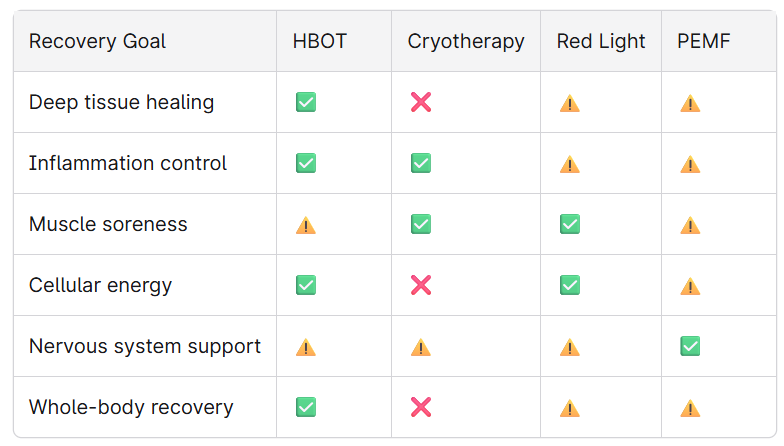
⚠️ = supportive but not primary
Choosing the Right Recovery Strategy
The most effective recovery plans are personalized. Factors that influence therapy selection include:
Injury history
Activity level
Stress load
Sleep quality
Recovery goals
At Huemn, recovery therapies are often combined strategically, not used in isolation. For example:
HBOT for deep healing + Cryotherapy for soreness
Red Light Therapy + PEMF for ongoing recovery support
HBOT cycles followed by maintenance therapies
This layered approach supports both immediate recovery and long-term resilience.
Recovery Therapies at Huemn
Huemn offers a comprehensive suite of medically guided recovery therapies, all delivered with clinical oversight and individualized planning.
Rather than prescribing a single modality, Huemn helps patients understand why a therapy is recommended, how it fits into their recovery plan, and when it should be adjusted.
This integrative model ensures recovery is intentional, effective, and aligned with long-term health.
FAQs
-
No. Each therapy serves a different purpose, and effectiveness depends on the individual and recovery goal.
-
Yes. Many patients benefit most from a combined approach.
-
No. HBOT may support recovery, inflammation management, and cognitive health as well.
-
Frequency depends on the therapy and individual needs and should be guided by professionals.
-
A personalized evaluation helps determine the best recovery strategy.
Summary
HBOT, Cryotherapy, Red Light Therapy, and PEMF each play a valuable role in recovery — but they work in fundamentally different ways.
Understanding these differences empowers you to choose therapies that align with your body’s needs rather than chasing trends. When guided by medical insight and personalization, recovery becomes not just faster, but smarter.
For individuals seeking a comprehensive, medically guided approach to recovery, Huemn offers access to all of these therapies under one roof, with care plans tailored to your specific goals and needs.