
Does Hyperbaric Oxygen Therapy Help Cancer Treatment?
Understanding the role, limits, and responsible use of HBOT in cancer-related care
A growing number of patients and caregivers are asking an important question: does hyperbaric oxygen therapy help cancer treatment?
As interest in integrative and supportive therapies increases, hyperbaric oxygen therapy is often discussed alongside conventional cancer treatment options.
Hyperbaric oxygen therapy is not a cure for cancer, nor is it used to directly replace established cancer therapies. However, research has explored how hyperbaric oxygen and oxygen therapy may influence the tumor microenvironment, tissue oxygenation, and recovery from cancer-related complications.
At Huemn, conversations around hyperbaric oxygen therapy and cancer are approached with clarity, caution, and medical responsibility — ensuring patients understand where evidence exists and where limitations remain.

Key Takeaways
Hyperbaric oxygen therapy is not a standalone cancer treatment
Research explores how hyperbaric oxygen may affect tumor hypoxia and tissue oxygenation
HBOT may be used as supportive care, not to treat cancer directly
Evidence does not support that HBOT promotes tumor growth when used appropriately
Huemn prioritizes evidence-based, physician-guided discussions for cancer patients
What Is Hyperbaric Oxygen Therapy?
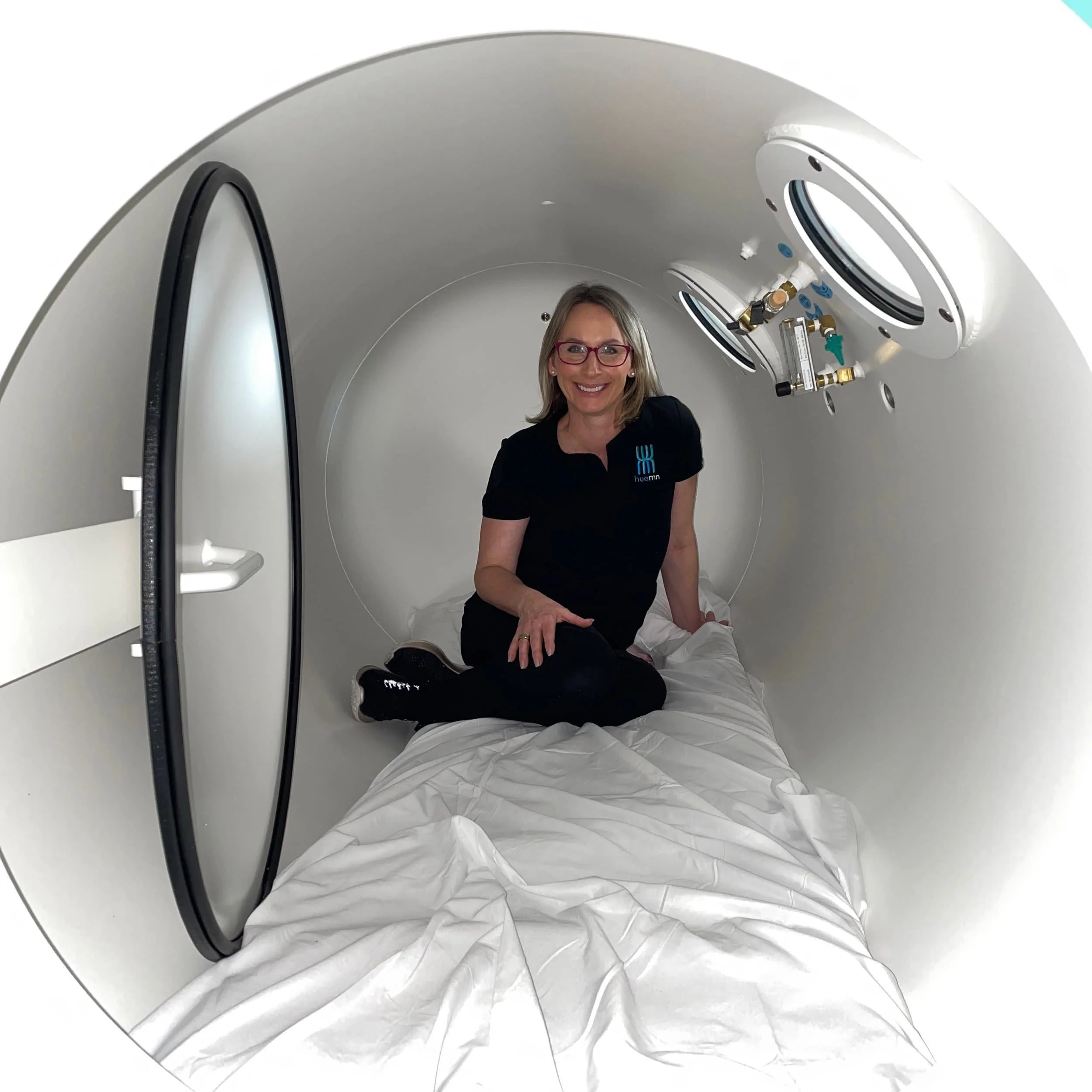
Hyperbaric oxygen therapy involves breathing pure oxygen inside a sealed hyperbaric chamber where air pressure is higher than normal atmospheric pressure. This environment increases oxygen concentration in the blood and improves oxygen delivery to tissues.
Hyperbaric oxygen therapy (also referred to as hyperbaric oxygen therapy HBOT or hbo therapy) has long been used in medicine for conditions such as carbon monoxide poisoning, serious infections, wound healing, and tissue damage involving damaged blood vessels.
By increasing oxygen supply under controlled pressure, hyperbaric oxygenation allows oxygen to reach areas with compromised circulation.
How Oxygen Levels Affect Cancer Biology
Many solid tumors exist in a state known as tumor hypoxia, where low oxygen levels contribute to cancer progression, tumor growth, and resistance to treatment. Tumor hypoxia is considered a key factor in poor prognosis for some cancer patients.
Low oxygen environments within tumor tissue can:
Promote tumor progression
Increase drug resistance
Reduce sensitivity to radiation therapy and chemotherapy drugs
This has led researchers to explore whether improving oxygen delivery through oxygen therapy could help overcome hypoxia in certain tumor models.
What Research Says About HBOT and Cancer
Preclinical research, including breast cancer models, prostate cancer studies, and mouse model investigations, has examined how hyperbaric oxygen affects tumor biology.
Some studies have reported:
Significantly reduced tumor growth in specific tumor models
Reduced tumor volume in experimental settings
Changes in tumor microenvironment and gene expression
Increased reactive oxygen species contributing to tumor apoptosis and cell death
Importantly, published reviews such as those in Nature Reviews Cancer (Nat Rev Cancer) and BMC Cancer indicate that hyperbaric oxygen does not promote tumor growth when used appropriately and may, in some contexts, retard cancer growth rather than accelerate it.
However, these findings are not sufficient to conclude HBOT can treat cancer in humans.
HBOT as Supportive Care in Cancer Treatment
While hyperbaric oxygen therapy is not used to kill cancer cells directly, it may be considered as supportive care for certain cancer-related complications.
Potential supportive uses discussed in medical literature include:
Tissue injury following radiation therapy (e.g., radiation-induced soft tissue damage)
Wound healing complications after surgery
Serious infections in immunocompromised patients
Support for damaged blood vessels and impaired oxygen delivery
HBOT may also be explored in adjunctive research with photodynamic therapy, targeted therapy, or chemotherapy drugs to improve tissue oxygenation and tumor sensitisation — always under strict medical supervision.
What Hyperbaric Therapy Does Not Do
It is critical to clarify that hyperbaric oxygen therapy:
Does not replace cancer therapy
Is not proven to treat cancer or prevent cancer recurrence
Is not used to induce angiogenesis or promote tumor growth
Is not a primary therapy for cancer metastasis or lung metastasis
Claims that hyperbaric oxygen can cure cancer or treat cancer independently are not supported by clinical efficacy data.
At Huemn, these distinctions are made clear in every patient discussion.
Hyperbaric Oxygen Therapy at Huemn
Huemn approaches hyperbaric oxygen therapy with a safety-first, evidence-informed framework. For cancer patients, HBOT discussions are centered on adjunctive support, quality of life, and recovery from treatment-related complications — never as a cancer cure.
Each patient is evaluated individually, and collaboration with oncology care teams is encouraged when appropriate. Huemn emphasizes transparency, medical ethics, and patient education in all hyperbaric therapy decisions.
FAQs
-
Some laboratory studies suggest increased oxygen may contribute to cell death in tumor models, but this does not translate to proven cancer treatment in humans.
-
Current evidence does not support that hyperbaric oxygen therapy promotes tumor growth when used appropriately.
-
Safety depends on the patient’s condition, treatment history, and medical oversight. Evaluation is essential.
-
HBOT is sometimes explored as supportive care but should only be considered in coordination with oncology providers.
-
Only after informed discussion with qualified healthcare professionals and with clear understanding of its role and limitations.
Summary
So, does hyperbaric oxygen therapy help cancer treatment? Current evidence suggests hyperbaric oxygen therapy may influence oxygen levels, tumor microenvironment factors, and tissue recovery — but it is not a cancer treatment itself.
When used responsibly, hyperbaric oxygen therapy may support healing and recovery in select situations related to cancer care. The key is ensuring therapy decisions are guided by medical evidence, physician oversight, and realistic expectations.