
Why Do My Legs Swell? Common Causes of Poor Circulation and Fluid Retention
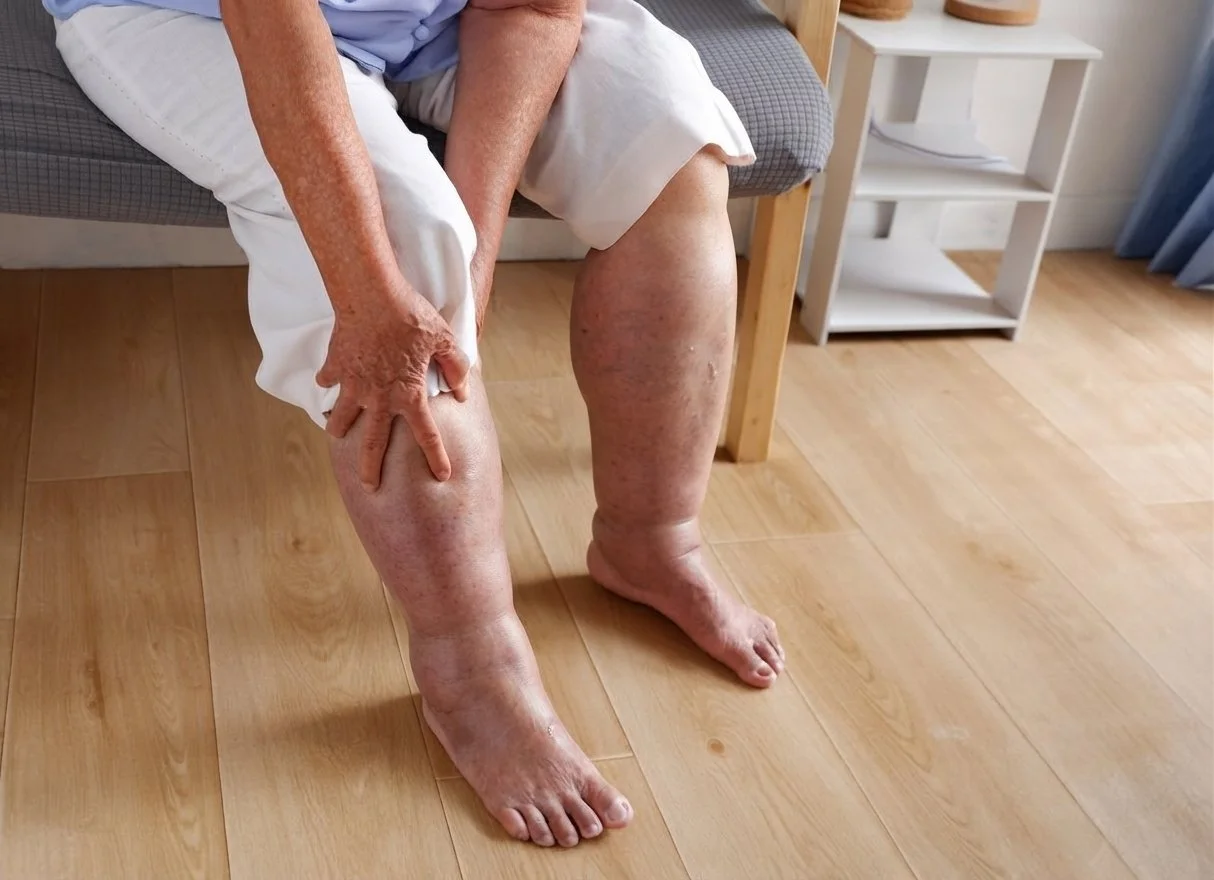
You notice it in the evening. Sock lines pressed deep into your ankles.
Shoes tighter than they were this morning. Legs that feel heavy, puffy, and a size bigger than they should be.
So why do your legs swell? Here's the direct answer: leg swelling happens when fluid collects in the tissues faster than your body can move it back out. Your circulation delivers fluid down easily, gravity sees to that, but returning it upward against gravity is real work, handled by your veins, your lymphatic system, and the muscles that pump them. When any part of that return system slows down, fluid pools, and your ankles are usually the first to know.
Sometimes that's a long day on your feet or a long-haul flight, and it resolves overnight. Sometimes it's a pattern that keeps returning, which is your body flagging that something in the system needs attention. Below we'll cover how the system works, the most common fluid retention causes, the warning signs that need a doctor rather than a wellness plan, and what genuinely supports better circulation.
First: When Leg Swelling Needs a Doctor, Not a Blog Post
Before anything else, because this one matters.
Seek urgent medical attention if swelling is in one leg only, especially if it came on quickly or comes with pain, warmth, redness, or tenderness in the calf. One-sided swelling can signal a blood clot (deep vein thrombosis), which is a medical emergency. If there's also chest pain or shortness of breath, call emergency services immediately.
See a doctor promptly if swelling:
Appears suddenly or is getting steadily worse
Comes with shortness of breath, chest discomfort, or reduced urination
Leaves a lasting dent when you press it (pitting) and keeps recurring
Comes with skin changes, ulcers, or broken skin
Occurs during pregnancy alongside headaches or vision changes
Leg swelling can be a symptom of heart, kidney, or liver conditions, all of which are diagnosable and manageable with proper m
How Your Circulation Actually Returns Fluid
Understanding the return journey makes every cause on the list below click into place.
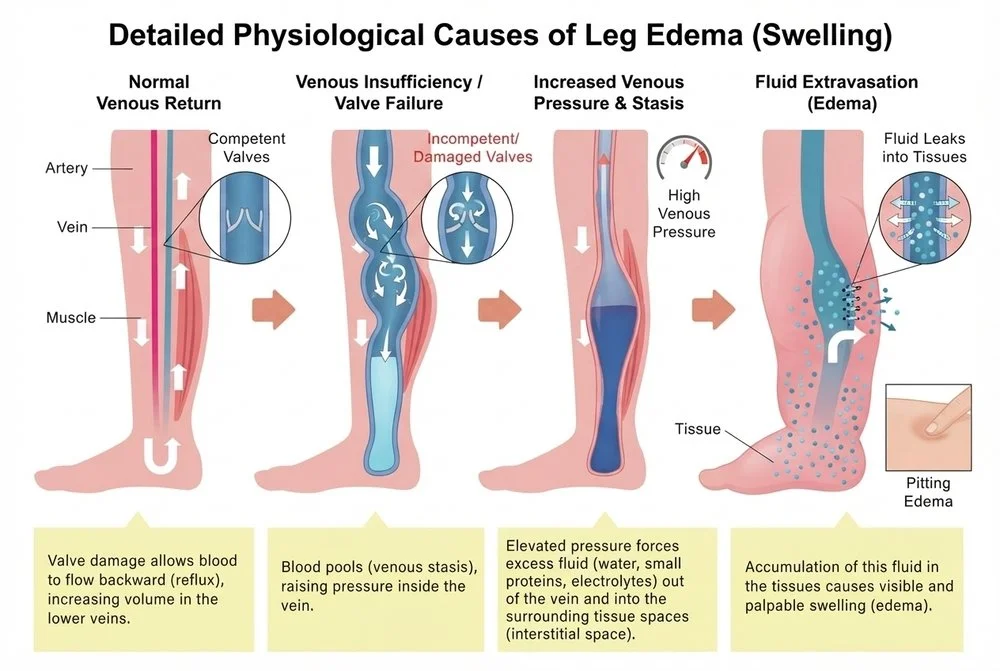
Your heart pumps blood down to your legs under pressure, easy. The return trip is the hard part. Veins carry blood back up using one-way valves, squeezed along by the muscles around them. Every step you take, your calf muscles act as a second heart, pumping blood upward. That's not a metaphor, physiologists literally call the calf the peripheral heart.
Alongside the veins runs your lymphatic system, the body's drainage network, collecting the fluid that naturally leaks from blood vessels into tissue and returning it to circulation. Unlike your heart-driven blood flow, the lymphatic system has no pump of its own. It relies almost entirely on muscle movement, breathing, and external stimulation to move.
So the return system depends on three things: working vein valves, moving muscles, and flowing lymph. Slow any of them down and fluid starts winning against gravity.
Common Fluid Retention Causes
Sitting or standing still for long periods. The single most common cause. No calf muscle movement means no peripheral pump, and fluid pools. Desk jobs, long drives, flights, and standing-still work all qualify. This is why swelling is so often worse by evening and gone by morning: lying flat takes gravity out of the fight.
Too much sodium. Salt holds water. A high-sodium diet, and most ultra-processed food is exactly that, increases the fluid your body retains overall, and your ankles collect the evidence.
Weight and body composition. Excess weight increases pressure on leg veins and the lymphatic system while typically reducing the daily movement that pumps them.
Hormonal shifts. Fluid retention commonly fluctuates with the menstrual cycle, pregnancy, and menopause. Pregnancy adds pressure on pelvic veins, which is why some ankle swelling in later pregnancy is common, though sudden or severe swelling always warrants a call to your care team.
Vein health. With age or genetics, vein valves can weaken, letting blood pool on the way up. Varicose veins, aching heaviness, and evening swelling often travel together. This is worth raising with a doctor, as venous insufficiency is common and manageable.
A sluggish lymphatic system. When lymph flow slows, through inactivity, surgery, or damage to lymph nodes, fluid and waste linger in the tissues. Post-surgical swelling is a classic example, which is why lymphatic support is a standard part of recovery after many procedures.
Medications. Some blood pressure medications, steroids, hormone treatments, and anti-inflammatories list fluid retention as a side effect. Never stop a medication on your own, but do raise persistent swelling with the doctor who prescribed it.
Heat. Blood vessels dilate in warm weather, making fluid leakage into tissue easier. Houston summers do legs no favours.
Underlying conditions. Heart, kidney, liver, and thyroid conditions can all drive fluid retention. This is precisely why persistent or worsening swelling belongs in front of a doctor first.
Most people's swelling involves several of these stacked together: a desk job, a salty diet, a hot climate, and a few missed workouts add up.
What Actually Helps: Supporting Circulation and Drainage
Once serious causes are ruled out, improving the return system is refreshingly practical. The searches say poor circulation treatment, but the honest framing is poor circulation support, built from consistent inputs:
Move, little and often. The calf pump only works when it's pumping. Break up sitting every 30 to 60 minutes, walk daily, and add calf raises while the kettle boils. Frequency beats intensity for circulation.
Elevate. Legs above heart level for 15 to 20 minutes gives gravity a turn on your side. End of day, after flights, after long shifts.
Audit the sodium. Shift the ratio from packaged food toward whole food and watch the evening puffiness respond. Hydration helps too, counterintuitively, well-hydrated bodies retain less.
Wear compression when it's needed. Compression socks for flights, long drives, and standing-heavy days support the veins mechanically. Your doctor can advise on the right grade.
Manage weight and build muscle. Stronger calves are a stronger pump, and less pressure on the system helps everything flow.
Sleep and stress. Poor sleep and chronic stress both influence the hormones that regulate fluid balance. The fundamentals never stop applying.
Where Huemn Fits: Supporting the Return System
This concern is one of the areas where our recovery menu is most directly relevant, because several of our services exist precisely to support circulation and lymphatic flow:
Lymphatic drainage is the natural starting point. Our Ballancer Pro system uses sequential compression across 24 overlapping chambers to mimic manual lymphatic drainage, moving fluid out of the tissues and supporting the body's natural drainage. It's one of our most requested services for post-surgical swelling, heavy legs, and fluid retention, and most members feel the difference from the first session.
Compression therapy on the NormaTec system delivers the same principle to the limbs with athlete-grade pulse patterns, flushing the legs and supporting venous return. Members who sit or stand all day describe it as the reset their legs were asking for.
Contrast therapy, cycling between sauna heat and cold plunge, drives blood vessels to dilate and constrict in turn, a genuine workout for the circulation. Whole body cryotherapy triggers the same constrict-and-rebound response in a 3.5 minute session. Red light therapy and PEMF support circulation and cellular function at the tissue level, and hyperbaric oxygen therapy supports oxygen delivery where circulation has been compromised.
And if the picture is bigger than legs, unexplained puffiness, fatigue, or fluid retention that doesn't track with lifestyle, Huemn Labs can test the systems involved, including kidney and thyroid markers, hormones, and inflammation, reviewed with a provider under physician oversight.
Every one of these is support for a system doing real work, layered on the fundamentals and appropriate medical care, never a replacement for either. If you're under a doctor's care for swelling, we're always happy to work alongside their guidance.
The Takeaway
Legs swell when the return system, veins, muscles, and lymph, falls behind gravity. For most people the causes are identifiable and workable: too much stillness, too much sodium, heat, hormones, weight, and time. The response is just as practical: move often, elevate, audit the salt, compress when needed, and support the drainage system doing the work.
And when swelling is one-sided, sudden, persistent, or paired with other symptoms, that's not a wellness project. That's a doctor's appointment, made promptly.
At Huemn, swelling, circulation and fluid retention is one of the concerns we're best equipped to support, with lymphatic drainage, compression therapy, and a full circulation-supporting menu under one roof, guided by testing and physician oversight, and zero quick-fix promises.
Your legs carry you everywhere. Give the return journey some support.
Book your free consultation today and let's get things moving.
Frequently Asked Questions
Why do my legs swell at the end of the day?
Gravity plus stillness. Through the day, fluid gradually wins against a return system that isn't being pumped, especially if you sit or stand in one place. Overnight, lying flat lets the system catch up, which is why morning legs look normal again. Regular movement breaks, elevation, and compression support all help.
When should I worry about leg swelling?
Seek urgent care for swelling in one leg only, especially with pain, warmth, or redness, as this can signal a blood clot. See a doctor promptly for sudden or worsening swelling, swelling with breathlessness or reduced urination, pitting that keeps recurring, or skin changes. Persistent swelling of any kind deserves a proper medical evaluation.
What is the fastest way to reduce fluid retention?
Elevate your legs, move regularly to activate the calf pump, cut back on sodium, and stay hydrated. For ongoing support, lymphatic drainage and compression therapy move fluid out of the tissues directly. If retention is persistent or unexplained, get it checked rather than managed around.
Does drinking more water help with fluid retention?
Usually, yes. Mild dehydration prompts the body to hold onto fluid, so consistent hydration supports normal fluid balance. Pair it with lower sodium intake for the strongest effect. If you've been told to restrict fluids for a medical condition, follow your doctor's guidance.
How can I improve poor circulation in my legs?
Daily movement is the foundation, the calf muscles are your second heart, and they only pump when you use them. Add elevation, compression when appropriate, a whole-food lower-sodium diet, and healthy weight. Supportive therapies such as compression therapy, lymphatic drainage, contrast therapy, and cryotherapy can be layered on top, with medical causes ruled out first.
The Takeaway
Legs swell when the return system, veins, muscles, and lymph, falls behind gravity. For most people the causes are identifiable and workable: too much stillness, too much sodium, heat, hormones, weight, and time. The response is just as practical: move often, elevate, audit the salt, compress when needed, and support the drainage system doing the work.
And when swelling is one-sided, sudden, persistent, or paired with other symptoms, that's not a wellness project. That's a doctor's appointment, made promptly.
At Huemn, swelling, circulation and fluid retention is one of the concerns we're best equipped to support, with lymphatic drainage, compression therapy, and a full circulation-supporting menu under one roof, guided by testing and physician oversight, and zero quick-fix promises.
Your legs carry you everywhere. Give the return journey some support.
Book your free consultation today and let's get things moving.
Disclaimer: The statements and content presented in this article have not been evaluated by the U.S. Food and Drug Administration (FDA). We do not diagnose, treat, or claim to treat any health conditions. All services provided by Huemn are intended solely to promote overall wellness, and information is published for educational purposes. Always consult with a healthcare professional before making any decisions related to your health.